High-Fiber Foods: Beans, Vegetables, Fruit and Grains Compared
Fiber in beans, vegetables, fruit, grains and seeds compared with USDA data as eaten and per spoonful, plus easy ways to add fiber and read labels.
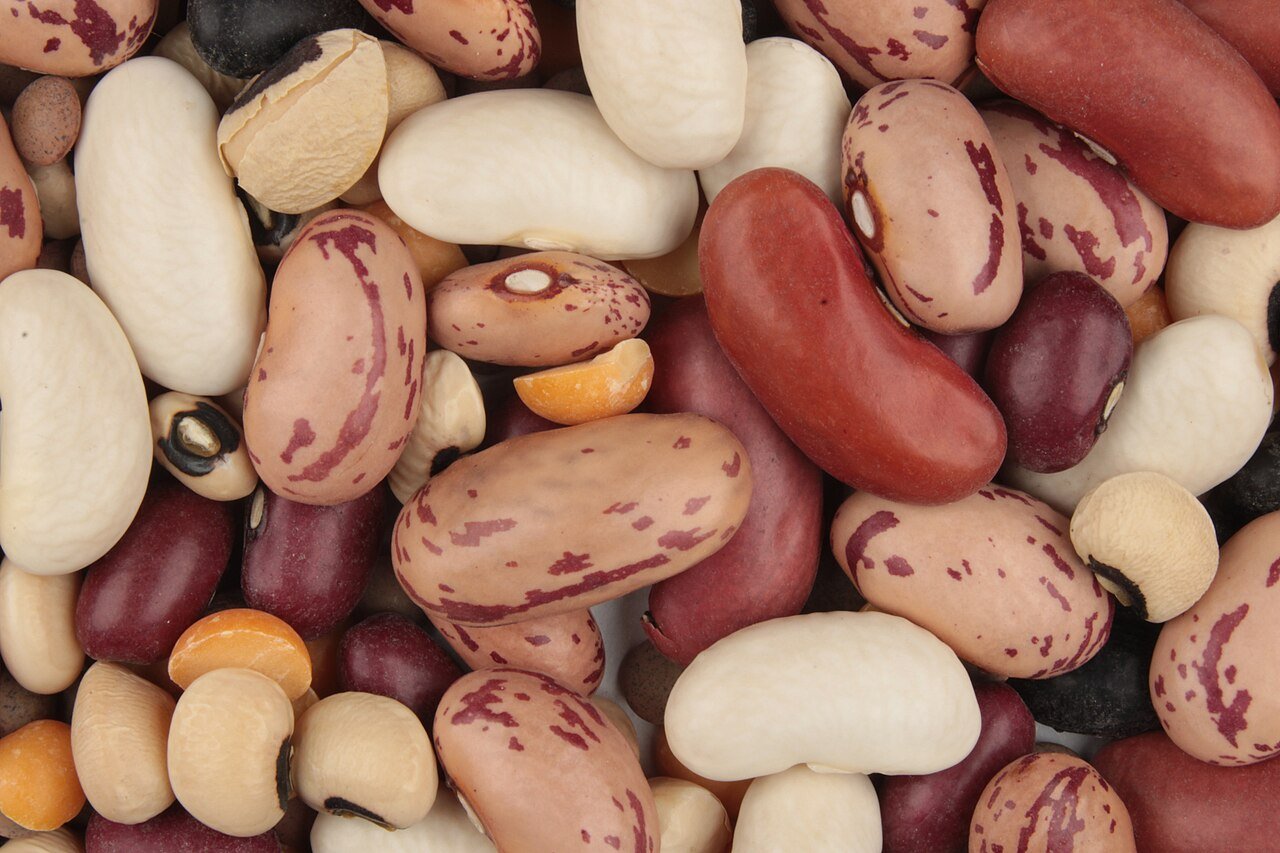

Most "high-fiber foods" lists rank things by 100 g, which puts dried herbs and bran at the top, foods nobody eats by the cupful. A more useful list compares food in the state you eat it: beans boiled, grains cooked, seeds by the spoonful. That changes the ranking a lot.
This guide uses USDA FoodData Central data to compare beans, vegetables, fruit, grains and seeds, then lays out practical ways to spread fiber across a day and read US labels.
Beans, vegetables and fruit, as eaten
| Food | Energy (kcal) | Carbohydrate (g) | Fiber (g) | Sugars (g) |
|---|---|---|---|---|
| Split peas, boiled | 118 | 21.1 | 8.3 | 2.9 |
| Lentils, boiled | 116 | 20.1 | 7.9 | 1.8 |
| Black beans, boiled | 132 | 23.7 | 8.7 | 0.32 |
| Chickpeas, boiled | 164 | 27.4 | 7.6 | 4.8 |
| Artichoke, boiled | 53 | 11.9 | 5.7 | 0.99 |
| Raspberries | 52 | 11.9 | 6.5 | 4.4 |
| Avocado | 160 | 8.5 | 6.7 | 0.66 |
| Green peas, frozen, boiled | 78 | 14.3 | 4.5 | 4.4 |
| Pear | 57 | 15.2 | 3.1 | 9.8 |
| Sweet potato, baked | 90 | 20.7 | 3.3 | 6.5 |
| Broccoli, boiled | 35 | 7.2 | 3.3 | 1.4 |
| Carrots, boiled | 35 | 8.2 | 3 | 3.5 |
| Banana | 89 | 22.8 | 2.6 | 12.2 |
| Apple, with skin | 52 | 13.8 | 2.4 | 10.4 |
| Orange | 47 | 11.8 | 2.4 | 9.3 |
| Potato, baked, with skin | 93 | 21.1 | 2.2 | 1.2 |
Source: USDA FoodData Central
What stands out:
- Legumes lead. Split peas, lentils, black beans and chickpeas are at the top. They also carry plenty of carbohydrate, so they are filling foods rather than garnish
- Avocado and raspberries are the non-legume standouts, followed by artichokes. Avocado has very little sugar
- Green peas are technically legumes too, and frozen peas are one of the cheapest fiber sources in the freezer case
- Everyday fruit is moderate. Pears and bananas edge out apples and oranges. Leave the peel on apples and potatoes where you can, since the skin is part of what is counted
- Sweet potato, broccoli and carrots land in a similar range, which makes them easy swaps for each other
Grains, pasta and bread
| Food | Energy (kcal) | Carbohydrate (g) | Fiber (g) |
|---|---|---|---|
| White rice, cooked | 130 | 28.2 | 0.4 |
| Brown rice, cooked | 123 | 25.6 | 1.6 |
| Pearled barley, cooked | 123 | 28.2 | 3.8 |
| Oatmeal, cooked with water | 71 | 12 | 1.7 |
| Pasta, cooked | 158 | 30.9 | 1.8 |
| Whole-wheat pasta, cooked | 149 | 30.1 | 3.9 |
| White bread | 266 | 49.4 | 2.7 |
| Whole-wheat bread | 252 | 42.7 | 6 |
Source: USDA FoodData Central
- White rice and regular pasta are low. Swapping to brown rice roughly quadruples the fiber per gram, and whole-wheat pasta roughly doubles it
- Pearled barley has more fiber than brown rice
- Oatmeal looks modest per 100 g because cooked oats are mostly water; a bowl is a decent contributor
- Whole-wheat bread has more than twice the fiber of white bread
Seeds and dried foods, by the spoonful
Nobody eats 100 g of chia seeds. This table uses 15 g, about a tablespoon of seeds, nuts or oats.
| Food | Energy (kcal) | Carbohydrate (g) | Fiber (g) |
|---|---|---|---|
| Chia seeds | 72.9 | 6.3 | 5.2 |
| Flaxseed | 80.1 | 4.3 | 4.1 |
| Popcorn, air-popped | 57.3 | 11.7 | 2.3 |
| Oats, dry | 56.9 | 10.2 | 1.5 |
| Figs, dried | 37.4 | 9.6 | 1.5 |
| Almonds | 86.8 | 3.2 | 1.9 |
Source: USDA FoodData Central
- Chia seeds and flaxseed deliver the most fiber per spoonful by a wide margin. Stirring a spoonful into yogurt or oatmeal is one of the easiest additions there is
- Air-popped popcorn is a whole grain and gives more fiber per spoonful than dry oats. Popcorn is so light that 15 g already fills a small bowl
- Dried figs and almonds add fiber too, along with more calories per gram
Spreading fiber through a day
Here is one way a typical American day can pick up fiber at each meal without a special diet:
| Meal | Low-fiber version | Higher-fiber swap |
|---|---|---|
| Breakfast | White toast with jam | Oatmeal with raspberries and a spoonful of chia |
| Lunch | Turkey sandwich on white bread | Same sandwich on whole-wheat bread, plus a pear |
| Snack | Pretzels | Air-popped popcorn or a few almonds |
| Dinner | White rice and chicken | Brown rice or barley, chicken and black beans, steamed broccoli |
The easiest order to add fiber
- Swap your bread and pasta to whole grain. You eat them already, so this changes the most with the least effort
- Add one serving of beans or lentils a day, in soup, chili, salad or tacos
- Leave the skin on apples, pears, potatoes and sweet potatoes
- Keep frozen vegetables and berries on hand for nights when fresh ones run out
- Finish with seeds: a spoonful of chia or ground flax on yogurt or cereal
- Go gradually and drink fluids. Fast increases often cause gas and bloating
Prep and cooking: what changes and what does not
- Cooking does not destroy fiber, but it softens it, which is why cooked vegetables feel less bulky
- Peeling removes fiber-rich skin. Scrub instead of peeling where you can
- Juicing removes fiber; blending keeps it
- Canned beans are convenient. Rinse them to cut sodium. If you cook dried kidney beans, cook them completely: FDA warns that raw or undercooked kidney beans can cause nausea, vomiting and diarrhea.
- Soak dried beans for more even cooking; lentils and split peas need no soaking
Reading a US label
- Dietary Fiber is listed under Total Carbohydrate in grams per serving
- "Good source of fiber" and "high fiber" are regulated claims on US packages; compare grams anyway, since serving sizes differ
- "Multigrain," "made with whole grains" and "wheat" do not guarantee much whole grain. Look for "whole" as the first ingredient
- Added fibers such as inulin or chicory root appear in bars and cereals; they raise the label number, and some people find them hard on the stomach
Cooking a pot of dried beans
Canned beans are fine, but a bag of dried beans costs less and lets you control the salt. A basic pot for black beans, chickpeas or kidney beans:
- Sort and rinse. Pick out small stones and shriveled beans, then rinse
- Soak overnight in plenty of cool water in the fridge. The beans roughly double in size, so use a big bowl
- Drain and use fresh water. Cover the beans by a couple of inches in a pot
- Boil, then simmer. Bring to a full boil, skim the foam, then lower the heat and simmer partly covered. Kidney beans in particular need a real boil, not just a warm soak or a low-temperature slow cooker; this is the FDA warning above
- Test several beans, not one. They are done when every bean is creamy all the way through
- Salt near the end and cool the beans in their liquid
Lentils and split peas skip steps 2 and 3 and go straight into the pot.
Common mistakes when adding fiber
- Counting juice as fruit. As the FAQ below notes, juicing leaves most of the fiber in the pulp. Eat the fruit or blend it whole
- Trusting color. Brown bread can be white bread with molasses or caramel color. The ingredient list, not the shade, tells you whether it is whole grain
- Adding everything at once. Beans at lunch, bran cereal at breakfast and a fiber bar in the afternoon on day one is a common recipe for an uncomfortable evening. Add one swap a week
- Forgetting the serving size. A cereal can look high in fiber because its listed serving is large. Compare products at the same serving
- Buying whole flaxseed and not grinding it. Whole seeds can pass through without being broken down, so many cooks grind a small amount at a time in a spice grinder
Storing high-fiber foods
| Food | Storage |
|---|---|
| Dried beans, lentils | Airtight, cool and dry. Older beans take longer to soften |
| Cooked beans and grains | Refrigerate within 2 hours, use within 3 to 4 days (USDA FSIS), or freeze in portions |
| Whole-grain flour and bread | Contains oils from the germ; refrigerate or freeze flour, freeze bread you will not finish soon |
| Chia, whole flax | Airtight and cool. Ground flax goes stale fast; refrigerate or freeze |
| Fresh fruit and vegetables | Most in the fridge crisper; bananas, potatoes and sweet potatoes at cool room temperature |
How different countries eat fiber-rich foods
- United States — Fiber comes mostly through bread, cereal and fruit. Bran cereals and whole-wheat bread are common, and beans show up in chili, baked beans and burritos
- Korea — Multigrain rice, many vegetable side dishes (namul), seaweed and fermented soybean pastes make fiber a background part of most meals
- Japan — Burdock root, seaweed such as hijiki, mushrooms, natto and okara (soy pulp) are everyday foods that add fiber without being thought of as "fiber foods"
- Spanish-speaking countries — Beans (frijoles) with corn tortillas in Mexico and Central America, lentil and chickpea stews (lentejas, cocido) in Spain, and fruit eaten whole as snacks
No one pattern is better. Starting from what you already eat and swapping one item at a time, as in the table above, is easier to stick with than a sudden overhaul.
FAQ
Is canned beans' fiber the same as home-cooked?
Canned beans are cooked beans in liquid, and their fiber is broadly similar to beans you boil yourself. The bigger difference is sodium; rinsing canned beans in a colander removes some of the salty liquid, and "no salt added" cans are widely available.
Does juicing or blending remove fiber?
Juicing removes most of it, because the pulp is left behind. Blending keeps the fiber in the cup, though the texture changes. A whole piece of fruit or a smoothie made from whole fruit keeps more fiber than juice.
Why does more fiber make me feel bloated?
A sudden jump in fiber, especially from beans, can cause gas while your digestion adjusts. Many people increase fiber gradually over a few weeks and drink enough fluids. If symptoms are severe or persistent, talk to a health professional.
What should I look for on a Nutrition Facts label?
Find "Dietary Fiber" under Total Carbohydrate and compare grams per serving between similar products. Also check the serving size, since a high number can come from a large serving, and look for "whole" grain as the first ingredient in bread and cereal.