Foods You Should Not Eat Raw: Beans, Potatoes, Meat and More
Why raw kidney beans, green potatoes, ginkgo nuts, fern shoots, raw meat, eggs and flour need care, with USDA cooking temperatures and step-by-step handling.
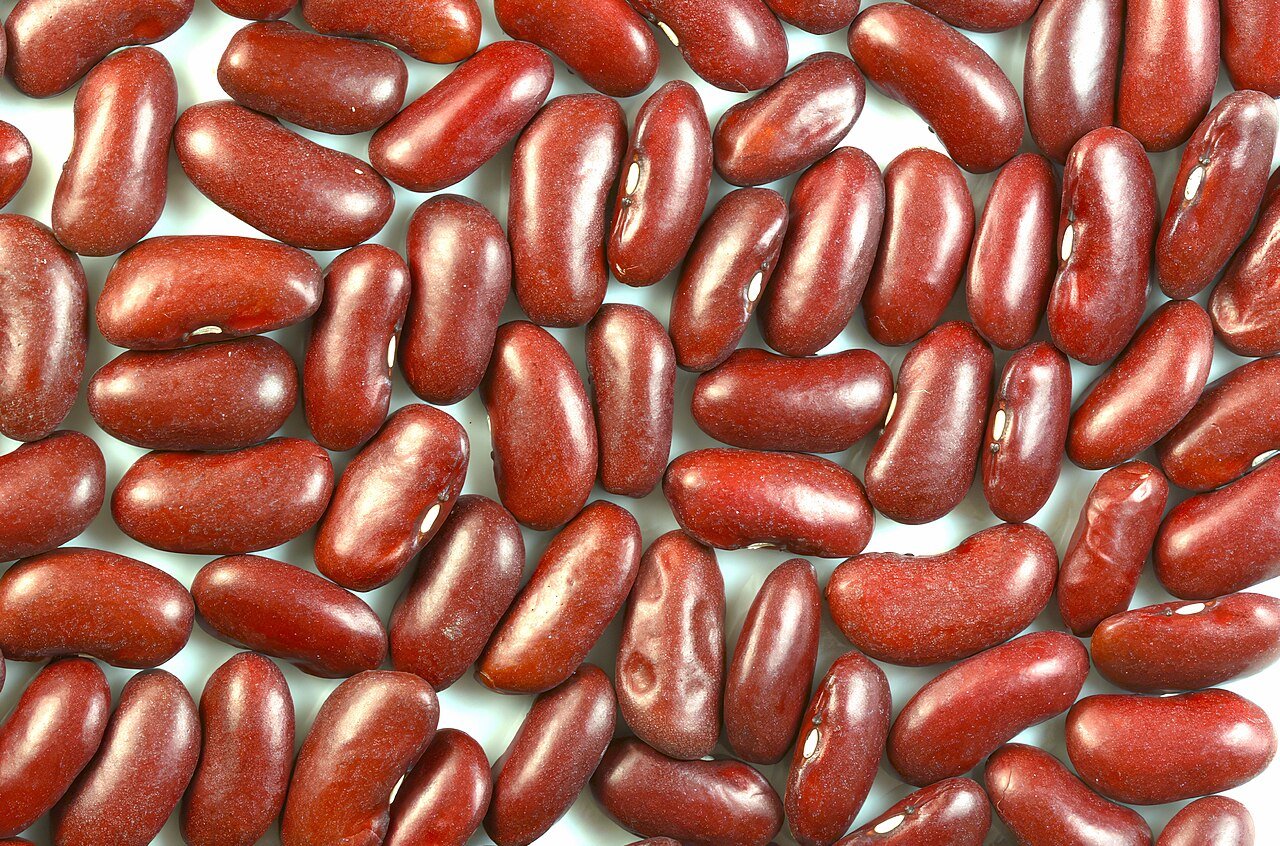

"Raw keeps more nutrients" is true for some vegetables. For a handful of foods, though, eating them raw or undercooked brings a risk that matters more than any vitamin. Those risks come from different places, and the right response differs too: sometimes cooking solves it, sometimes you cut part away, and sometimes you simply eat less.
This guide sorts common kitchen foods by where the risk comes from. Cooking temperatures are given only where an official agency publishes them, with the agency named.
Three sources of risk
| Source | What it is | Does cooking help? | Examples |
|---|---|---|---|
| Natural compounds in plants | Substances the plant makes to protect itself | Some break down with heat; some do not | Kidney beans, soybeans, green potatoes, ginkgo nuts, fern shoots |
| Parasites | Living organisms inside raw flesh | Thorough cooking deals with them | Freshwater fish, pork, wild game |
| Bacteria | Germs on the surface or inside food | Thorough cooking deals with them | Poultry, ground meat, raw eggs, raw flour |
The reason to separate them: "just cook it" is wrong for part of the first group.
Kidney beans: never raw, never undercooked
Dried red kidney beans contain a lectin called phytohaemagglutinin (PHA). The US Food and Drug Administration (FDA) describes illness from eating raw or undercooked kidney beans, with nausea, vomiting and diarrhea.
The compound is destroyed by thorough boiling, but warm, gentle heat does not reliably destroy it. That is why putting dried kidney beans straight into a slow cooker is the classic mistake.
- Soak dried kidney beans in plenty of water, usually overnight
- Drain and discard the soaking water; add fresh water
- Bring to a full, rolling boil over high heat, not just a simmer
- Keep cooking until the beans are completely soft and crush easily between your fingers
- For a slow cooker, cook the beans this way first, then add them
Raw soybeans also carry compounds that interfere with digestion, which is why soybeans are eaten boiled, roasted, or made into tofu, miso and soy milk. Homemade soy milk is boiled for the same reason.
The table below compares dry and cooked kidney beans from USDA FoodData Central. It does not measure PHA; it shows how much water dried beans take up.
| Food | Energy (kcal) | Water (g) | Protein (g) | Carbohydrate (g) | Fiber (g) |
|---|---|---|---|---|---|
| Red kidney beans, dry (raw) | 337 | 11.8 | 22.5 | 61.3 | 15.2 |
| Red kidney beans, boiled | 127 | 66.9 | 8.7 | 22.8 | 7.4 |
| Red kidney beans, canned, drained solids | 124 | 68.1 | 8.0 | 21.5 | 5.5 |
Source: USDA FoodData Central
Dry beans absorb so much water that 100 g of cooked beans is a very different amount from 100 g of dry ones. Canned beans are close to home-cooked ones.
Green potatoes and sprouts: cooking does not fix them
When potatoes sprout or their skin turns green from light, those parts build up glycoalkaloids such as solanine. These are heat-stable, so boiling, baking or frying does not remove them. The answer is cutting, not cooking.
- Dig out sprouts deeply with the tip of a knife or a peeler, including the base
- Peel green skin thickly until no green shows
- Discard potatoes that are green all over, long-sprouted or shriveled
- Store potatoes in a cool, dark place, away from light, to slow sprouting and greening
Fern shoots and ginkgo nuts
Bracken fern (gosari in Korean, warabi in Japanese) is never eaten raw. In Korea and Japan it is boiled, soaked in fresh water that is changed several times, and often dried for storage, then soaked and boiled again before cooking. Packaged prepared bracken has already gone through this. In the northeastern US and Canada, spring fiddleheads from ostrich ferns are also always cooked thoroughly rather than eaten raw.
Ginkgo nuts contain a compound that interferes with vitamin B6, and it is not removed by cooking. Eating many at once can make people sick, and children are more sensitive. In Korean and Japanese cooking, roasted or boiled ginkgo nuts appear a few at a time as a garnish, not as a snack eaten by the handful. Wear gloves when handling fresh ginkgo fruit; the smelly outer flesh can irritate skin.
The next table, from Japan's official food composition tables, shows these foods raw and cooked. Like the bean table, it does not measure the problem compounds.
| Food | Energy (kcal) | Water (g) | Carbohydrate (g) | Potassium (mg) |
|---|---|---|---|---|
| Bracken fern shoots, raw | 19 | 92.7 | 4 | 370 |
| Bracken fern shoots, boiled | 13 | 95.2 | 3 | 10 |
| Ginkgo nuts, raw | 168 | 57.4 | 34.8 | 710 |
| Ginkgo nuts, boiled | 169 | 56.9 | 35.8 | 580 |
| Potato, peeled, raw | 59 | 79.8 | 17.3 | 410 |
| Potato, peeled, steamed | 76 | 78.8 | 18.1 | 420 |
Source: MEXT, Standard Tables of Food Composition in Japan (8th rev., 2023 suppl.)
- Boiled bracken keeps almost none of its potassium. It shows how much water-soluble content leaves during boiling and soaking, which is the point of the traditional preparation
- Ginkgo barely changes with cooking. Calories and carbohydrate stay about the same, a reminder that cooking does not change what is in it
- Potato's water, carbohydrate and potassium barely move when steamed, so cooking is not what makes a green potato usable; cutting away the green part is
Meat, poultry and eggs: bacteria and parasites
For meat, cooking handles the risk, and USDA's Food Safety and Inspection Service (FSIS) gives these internal temperatures, measured with a food thermometer:
| Food | Safe minimum internal temperature (USDA FSIS) |
|---|---|
| Whole cuts of beef, pork, veal and lamb (steaks, chops, roasts) | 145°F, then rest 3 minutes |
| Ground meats (beef, pork, veal, lamb) | 160°F |
| All poultry, including ground poultry | 165°F |
| Leftovers, when reheated | 165°F |
| Food | Energy (kcal) | Water (g) | Protein (g) | Fat (g) |
|---|---|---|---|---|
| Pork loin, raw | 198 | 66.9 | 19.7 | 12.6 |
| Pork loin, roasted | 248 | 57.5 | 27.1 | 14.7 |
| Chicken breast, skinless, raw | 120 | 73.9 | 22.5 | 2.6 |
| Chicken breast, roasted | 165 | 65.3 | 31.0 | 3.6 |
| Ground beef 85% lean, raw | 215 | 65.7 | 18.6 | 15 |
| Ground beef 85% lean, pan-broiled patty | 232 | 60.6 | 24.6 | 14.0 |
| Egg, raw | 143 | 76.2 | 12.6 | 9.5 |
| Egg, hard-boiled | 155 | 74.6 | 12.6 | 10.6 |
Source: USDA FoodData Central
Cooked meat loses water, so per 100 g its protein and calories look higher than raw. Nothing is added; the same protein sits in less weight.
- Ground meat needs more heat than steak because grinding spreads surface bacteria through the whole piece
- Never rinse raw chicken. It splashes bacteria onto the sink and counters
- Raw eggs can carry Salmonella. For homemade mayonnaise, eggnog, tiramisu or Caesar dressing, many cooks buy pasteurized eggs
- Raw flour has not been treated to kill germs, so raw dough and batter should be baked first
Freshwater fish
Fish from rivers and lakes can carry parasites when eaten raw, which is why freshwater fish is traditionally cooked in most cuisines. Use a separate knife and cutting board for raw fish, and wash them in hot, soapy water afterward.
Kitchen habits that cover most of these
- Keep raw meat, poultry and fish apart from ready-to-eat foods in the cart, the fridge (bottom shelf, in a container) and on the counter
- Use separate cutting boards, or wash the board, knife and your hands with hot, soapy water before switching to vegetables or bread
- Check doneness with a thermometer in the thickest part, not by color or cooking time alone
- Refrigerate cooked food promptly. USDA FSIS advises within 2 hours, or within 1 hour when the air is above 90°F
- When in doubt about an unfamiliar food, such as a wild plant or a nut from a backyard tree, do not eat it raw and look up how it is traditionally prepared first
How different countries handle raw food
- United States — Rare steak, raw oysters and sushi are popular, while ground beef and poultry are expected to be cooked through. Pasteurized eggs and heat-treated flour serve raw-dough and dressing recipes
- Korea — Raw beef (yukhoe) and sliced raw sea fish are enjoyed, but bracken and ginkgo always go through long preparation, and freshwater fish is meant to be cooked
- Japan — Raw sea fish and raw egg on rice are everyday foods, supported by strict freshness handling, while freshwater fish is usually grilled or simmered
- Spanish-speaking countries — Ceviche "cooks" fish in citrus juice, which changes texture but is not the same as heat. Beans such as frijoles are always simmered long and soft
Every cuisine has its raw foods and its always-cooked foods. Knowing which group a food belongs to, and why, matters more than a blanket rule.
FAQ
Are canned kidney beans safe to eat without cooking?
Canned beans have already been cooked during canning, so they can be rinsed and used as they are or simply warmed. The concern the FDA describes applies to raw or undercooked dried kidney beans.
Can I just cut off the green part of a potato?
For a small green patch or a few sprouts, cut them out deeply and peel the green skin until no green shows. If the potato is green all over, heavily sprouted or shriveled, do not use it. Cooking does not remove these compounds.
Is pink pork unsafe?
Color is not a reliable test. USDA's Food Safety and Inspection Service says whole cuts of pork are done at 145°F followed by a 3-minute rest, and pork at that temperature can still look slightly pink. Ground pork needs 160°F. Use a thermometer.
Is it safe to taste raw cookie dough?
Raw dough contains raw flour and usually raw egg. Flour is not treated to kill germs before it is sold, and raw eggs can carry bacteria, so baking it is the safer choice. Some brands sell edible dough made with heat-treated flour and no raw egg.