Carbs in Common Foods: Rice, Pasta, Bread, Potatoes and Fruit
USDA figures comparing carbohydrate, fiber and sugar in rice, pasta, bread, potatoes, beans, fruit, juice and milk, plus how to build a plate around them.
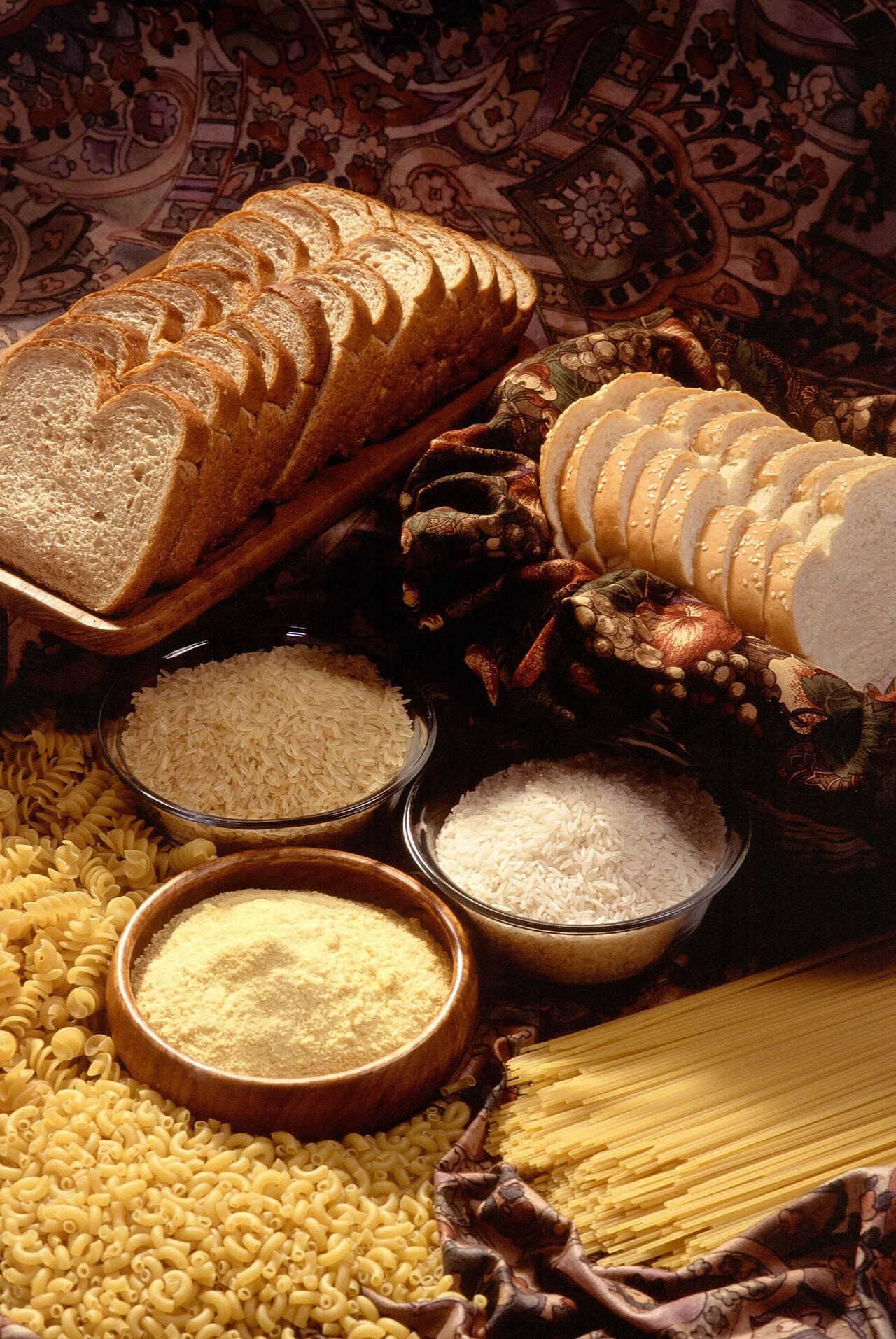

"Carbs" gets used as if it were one food. On an actual plate it is a bowl of rice, a slice of toast, a baked potato, a handful of grapes or a glass of juice, and those differ in ways the single word hides. Some come with plenty of fiber, some with almost none. Some bring protein along. Some are mostly sugar dissolved in water.
This guide puts those foods side by side using USDA FoodData Central, so you can compare them on the same footing before deciding what fits your meals.
Three kinds of carbohydrate
Nutrition labels split carbohydrate into parts, and it helps to know them before reading the tables:
- Starch — long chains of glucose stored in grains, potatoes and beans. Most of the carbohydrate in rice, bread and pasta is starch
- Sugars — small molecules such as glucose, fructose, sucrose and lactose. Fruit, milk, juice and soda carry their carbohydrate mostly as sugars
- Fiber — the part your own digestive enzymes do not break down. It is counted inside total carbohydrate on US labels
So two foods with the same total carbohydrate can look very different once you split the number into those three parts.
Carbohydrate foods by group
The table shows 100 g of each food the way it is usually eaten. Rice, oatmeal and pasta are cooked, since nobody eats them dry; bread and tortillas are as sold.
| Food | Energy (kcal) | Carbohydrate (g) | Fiber (g) | Protein (g) |
|---|---|---|---|---|
| White rice, long-grain, cooked | 130 | 28.2 | 0.4 | 2.7 |
| Oatmeal, cooked with water | 71 | 12 | 1.7 | 2.5 |
| Pasta, enriched, cooked | 158 | 30.9 | 1.8 | 5.8 |
| White bread | 266 | 49.4 | 2.7 | 8.8 |
| Corn tortilla | 218 | 44.6 | 6.3 | 5.7 |
| Potato, boiled in skin | 87 | 20.1 | 1.8 | 1.9 |
| Sweet potato, baked | 90 | 20.7 | 3.3 | 2.0 |
| Black beans, cooked | 132 | 23.7 | 8.7 | 8.9 |
| Chickpeas, cooked | 164 | 27.4 | 7.6 | 8.9 |
| Banana | 89 | 22.8 | 2.6 | 1.1 |
| Milk, 2% | 50 | 4.8 | 0 | 3.3 |
Source: USDA FoodData Central
What the rows show:
- Cooked grains absorb water. Cooked rice and pasta have far less carbohydrate per 100 g than bread, because a large share of their weight is water. Oatmeal made with water is lower still
- Bread and tortillas are dense. Per 100 g they are the highest rows. A single slice or tortilla weighs much less than 100 g, so check the package's serving size
- Beans stand out on fiber and protein. Black beans and chickpeas have the most fiber in the table and protein on par with bread and well above the cooked grains and potatoes
- Sweet potato and potato are close in carbohydrate, but sweet potato has more fiber and noticeably more sugar, which is why it tastes sweet
- Milk's carbohydrate is lactose. It looks small next to the starchy foods, but people drink it by the glass
Refined vs. whole grain: the difference is in the fiber column
Refining removes the bran and germ. That changes texture and shelf life, and in the tables it shows up mainly as fiber.
| Food | Energy (kcal) | Carbohydrate (g) | Fiber (g) | Protein (g) |
|---|---|---|---|---|
| White rice, long-grain | 130 | 28.2 | 0.4 | 2.7 |
| Brown rice, long-grain | 123 | 25.6 | 1.6 | 2.7 |
| Pasta, enriched | 158 | 30.9 | 1.8 | 5.8 |
| Pasta, whole-wheat | 149 | 30.1 | 3.9 | 6.0 |
| White bread | 266 | 49.4 | 2.7 | 8.8 |
| Whole-wheat bread | 252 | 42.7 | 6 | 12.4 |
| Barley, pearled | 123 | 28.2 | 3.8 | 2.3 |
| Bulgur | 83 | 18.6 | 4.5 | 3.1 |
Source: USDA FoodData Central
- Total carbohydrate barely moves. Brown rice and white rice, or whole-wheat and regular pasta, sit close to each other
- Fiber moves a lot. Brown rice has several times the fiber of white rice, whole-wheat pasta about twice that of regular pasta, and whole-wheat bread more than twice that of white bread
- Barley and bulgur are worth knowing. Both are higher in fiber than brown rice, and bulgur is the lowest-calorie grain in the table because it holds so much water when cooked
Switching gradually
If your household is used to white rice and white bread, a sudden full switch often ends with a bag of brown rice sitting unused. A slower route works better:
- Mix grains. Start with about a quarter brown rice in the pot of white rice, and increase as the texture becomes familiar
- Change one meal at a time. Whole-wheat toast at breakfast, regular pasta at dinner is still a change
- Pick shapes that hide texture. Whole-wheat penne in a chunky sauce is easier to like than whole-wheat spaghetti with butter
- Read the ingredient list, not the color. On US packages, "whole wheat" or "whole grain" should be the first ingredient. "Multigrain" or "wheat bread" alone does not mean whole grain, and some brown breads get their color from molasses
Fruit and juice: similar sugar, different fiber
| Food | Energy (kcal) | Carbohydrate (g) | Fiber (g) | Sugars (g) |
|---|---|---|---|---|
| Apple, with skin | 52 | 13.8 | 2.4 | 10.4 |
| Apple juice, unsweetened | 46 | 11.3 | 0.2 | 9.6 |
| Orange | 47 | 11.8 | 2.4 | 9.3 |
| Orange juice, fresh | 45 | 10.4 | 0.2 | 8.4 |
| Banana | 89 | 22.8 | 2.6 | 12.2 |
| Grapes | 69 | 18.1 | 0.9 | 15.5 |
| Milk, 2% | 50 | 4.8 | 0 | 5.1 |
| Yogurt, plain, whole milk | 61 | 4.7 | 0 | 4.7 |
| Cola, regular | 42 | 10.4 | 0 | 9.9 |
Source: USDA FoodData Central
- Fruit and its juice line up on sugar. Per 100 g, apple and unsweetened apple juice are close, as are orange and orange juice
- Fiber nearly vanishes in juice. Pressing leaves most of it behind in the pulp
- Portion size is the real gap. A glass of juice usually weighs much more than one apple, and it goes down in a minute. Whole fruit takes chewing
- Regular cola carries about as much sugar per 100 g as juice, with no fiber, protein or potassium alongside it
- Grapes are the sweetest fruit in this table, and bananas carry more carbohydrate than apples or oranges because they still contain some starch
Building a meal around carbohydrate
There is no single correct amount; it depends on age, activity and what else is on the plate. Instead of a number, try these steps when putting a meal together:
- Pick one main starch. Rice and a bread roll and potatoes on one plate is a common way carbohydrate piles up without anyone noticing
- Choose its form. Where you can, take the version with more fiber: brown rice, whole-wheat bread, potato with the skin, beans
- Add protein next to it. Fish, chicken, eggs, tofu or beans
- Fill the rest with vegetables. Leafy greens and non-starchy vegetables add volume with little carbohydrate
- Count the drink. Juice, soda and sweetened coffee drinks are carbohydrate too, and they are easy to forget
Note that corn, peas, potatoes and winter squash behave more like starches than like leafy vegetables, so they can take the starch spot on the plate.
Storing cooked rice, pasta and potatoes
Batch-cooking starches saves time, and the same leftover rules apply as for any cooked food. USDA's Food Safety and Inspection Service advises:
| Step | Guideline (USDA FSIS) |
|---|---|
| Cool and refrigerate | Within 2 hours of cooking; within 1 hour if the air is above 90°F |
| Keep in the fridge | Eat within 3 to 4 days |
| Reheat | To 165°F, until steaming hot |
Spread a big pot of rice or pasta into shallow containers so it cools quickly. For longer storage, freeze rice in flat, portion-size bags; it reheats more evenly than a solid block.
How different countries eat their carbohydrates
- United States — Carbohydrate arrives in many forms at once: sandwich bread, breakfast cereal, pasta, potatoes, tortillas and a large share from sweetened drinks and snacks. Whole-grain versions of almost everything sit next to the refined ones on the shelf
- Korea — A bowl of rice is the center of the meal, and side dishes are planned around it. Mixed-grain rice (japgokbap) with barley, beans or brown rice is a common everyday version
- Japan — Rice is the main staple, alongside noodles such as udon and soba. White rice is the norm at home, with rice mixed with barley or other grains as an option
- Spanish-speaking countries — In Mexico, corn tortillas made from nixtamalized corn are the daily staple, often paired with beans. In Spain, bread accompanies most meals, and rice dishes such as paella are regional favorites
Each of these meals pairs its main starch with something else: beans, side dishes, fish or vegetables. Looking at what sits next to the carbohydrate tells you more about a meal than the carbohydrate alone.
FAQ
Are whole-grain foods lower in carbohydrate than refined ones?
Not by much. In the USDA figures above, whole-wheat pasta and brown rice carry about the same total carbohydrate as their refined versions. The column that changes is fiber, which is clearly higher in the whole-grain rows.
Is the sugar in fruit the same as the sugar in juice?
Per 100 g, an apple and unsweetened apple juice show similar sugar, and the same goes for an orange and orange juice. The difference is fiber, which almost disappears when fruit is pressed into juice, and how much of each people tend to consume at once.
Why does milk show carbohydrate?
Milk and plain yogurt contain lactose, a natural milk sugar. That is why their carbohydrate and sugar figures are almost the same in the table. Flavored yogurts and chocolate milk have added sugar on top, so check the Nutrition Facts label.
How long can I keep cooked rice, pasta or potatoes?
Handle them like any cooked leftover. USDA's Food Safety and Inspection Service says to refrigerate within 2 hours (1 hour above 90°F), eat within 3 to 4 days, and reheat leftovers to 165°F.