Cooking Oils and Fats Compared: Saturated Fat, Uses, Storage
Olive, canola, peanut, coconut oil, butter and lard compared with USDA data per 100 g and per tablespoon, plus which oil suits which job and storage.
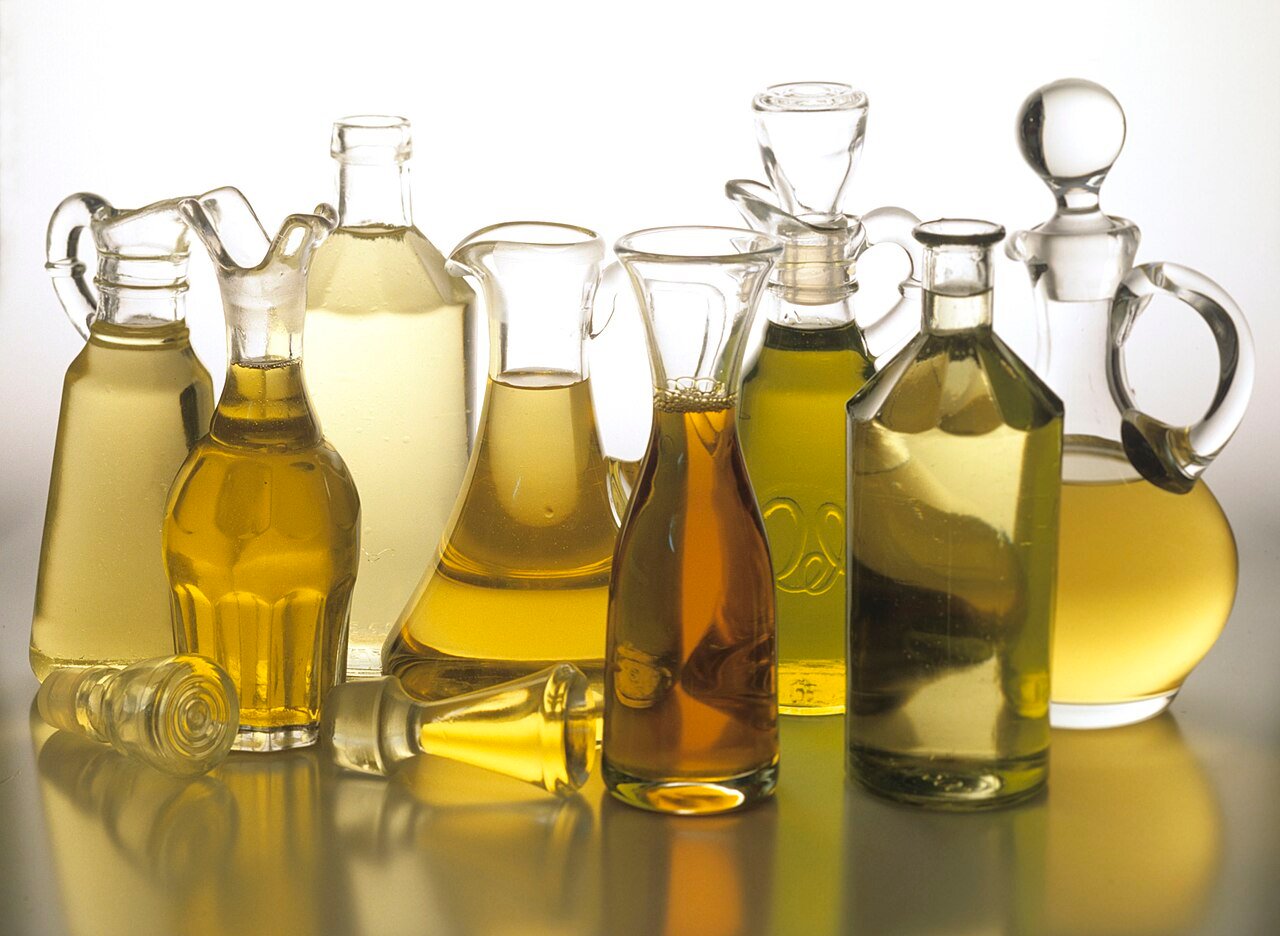

Choosing a cooking oil often starts from a slogan on the label. The questions that matter in a kitchen are more concrete: how the fats differ on paper, which one suits searing, baking or salad dressing, and how to keep a bottle from going rancid before you finish it.
This guide compares common US cooking oils and solid fats with USDA FoodData Central figures, shows the same fats per tablespoon, looks at fat in everyday foods, and ends with practical choices by dish.
Three columns worth reading on any fat
- Total fat — For oils, this is essentially 100 g per 100 g. Butter is lower because it contains water and milk solids
- Saturated fat — The column where oils differ most. It is also why some fats are solid at room temperature and others are liquid
- Cholesterol — Found only in animal fats. Plant oils show zero
Calories follow total fat, so pure oils all land in the same place.
Cooking oils and solid fats, 100 g each
| Food | Energy (kcal) | Fat (g) | Saturated fat (g) | Cholesterol (mg) |
|---|---|---|---|---|
| Olive oil | 884 | 100 | 13.8 | 0 |
| Canola oil | 884 | 100 | 7.4 | 0 |
| Soybean oil (often sold as "vegetable oil") | 884 | 100 | 15.7 | 0 |
| Corn oil | 900 | 100 | 12.9 | 0 |
| Peanut oil | 884 | 100 | 16.9 | 0 |
| Grapeseed oil | 884 | 100 | 9.6 | 0 |
| Sesame oil | 884 | 100 | 14.2 | 0 |
| Coconut oil | 892 | 99.1 | 82.5 | 0 |
| Butter, unsalted | 717 | 81.1 | 50.5 | 215 |
| Lard | 902 | 100 | 39.2 | 95 |
| Beef tallow | 902 | 100 | 49.8 | 109 |
Source: USDA FoodData Central
- Calories are practically identical across the liquid oils. "Light" olive oil refers to color and flavor, not calories
- Canola oil has the least saturated fat in the table. Grapeseed, corn, olive, sesame and soybean oils sit in a similar middle band, with peanut oil a little higher
- Coconut oil is the outlier. Its saturated fat is far higher than butter, lard or beef tallow, which is why it is solid in a cool kitchen
- Butter, lard and tallow carry cholesterol; butter has the most
- "Vegetable oil" in US supermarkets is most often soybean oil or a blend. The ingredient list tells you which
Per tablespoon: what actually goes in the pan
Recipes use tablespoons, not 100 g. Here is roughly one tablespoon (14 g) of each.
| Food | Energy (kcal) | Fat (g) | Saturated fat (g) | Sodium (mg) |
|---|---|---|---|---|
| Olive oil | 124 | 14.0 | 1.9 | 0.28 |
| Canola oil | 124 | 14.0 | 1.0 | 0 |
| Coconut oil | 125 | 13.9 | 11.5 | 0 |
| Butter, unsalted | 100 | 11.4 | 7.1 | 1.5 |
| Vegetable oil spread, 60% fat | 74.9 | 8.3 | 1.4 | 110 |
| Mayonnaise, regular | 95.2 | 10.5 | 1.6 | 88.9 |
Source: USDA FoodData Central
A tablespoon of any oil carries a similar amount of calories, and butter about a fifth less. Regular mayonnaise is mostly oil, so a spoonful of it has roughly three-quarters of the calories of a spoonful of oil, with sodium added. Spreads with 60% fat contain water, so they carry fewer calories per tablespoon than butter and much more sodium than unsalted butter.
Measure instead of pouring
- Use a measuring spoon for sautéing; a "glug" from the bottle is often two or three tablespoons
- Try a pastry brush or oil mister for sheet pans and grill grates
- Toss vegetables in a bowl with a measured spoonful before roasting, rather than drizzling on the pan, so the oil coats evenly
- Use nonstick or well-seasoned cast iron for eggs and fish, which need less oil
Fat inside everyday foods
Most fat in a typical diet comes from food, not the oil bottle.
| Food | Energy (kcal) | Protein (g) | Fat (g) | Saturated fat (g) |
|---|---|---|---|---|
| Pork belly | 518 | 9.3 | 53.0 | 19.3 |
| Ground beef, 80% lean | 254 | 17.2 | 20 | 7.6 |
| Salmon, Atlantic, farmed | 208 | 20.4 | 13.4 | 3.0 |
| Mackerel, Atlantic | 205 | 18.6 | 13.9 | 3.3 |
| Egg | 143 | 12.6 | 9.5 | 3.1 |
| Cheddar cheese | 408 | 23.3 | 34 | 19.2 |
| Almonds | 579 | 21.1 | 49.9 | 3.8 |
| Walnuts | 654 | 15.2 | 65.2 | 6.1 |
| Avocado | 160 | 2 | 14.7 | 2.1 |
| Tofu, firm | 78 | 9.0 | 4.2 | 0.79 |
Source: USDA FoodData Central
- Pork belly and cheddar cheese are high in both total and saturated fat
- Almonds, walnuts and avocado are high in fat but relatively low in saturated fat
- Salmon and mackerel have less total fat than 80% lean ground beef and much less saturated fat
- Eggs and firm tofu are moderate
"Low-fat" versions of products such as dressings or cookies sometimes replace fat with sugar or starch. Compare full labels rather than one line.
Choosing an oil by dish
| Job | Common choices | Why |
|---|---|---|
| Salad dressing, drizzling | Extra-virgin olive oil, toasted sesame oil (a few drops) | Flavor is the point; no heat |
| Everyday sautéing | Olive oil, canola oil | Versatile, moderate heat |
| High-heat searing, stir-frying | Refined peanut, canola, soybean oil | Tolerate high heat with neutral flavor |
| Deep-frying | Peanut, canola, vegetable oil | Neutral and economical in large amounts |
| Baking cakes and muffins | Canola or vegetable oil | Neutral taste, moist crumb |
| Pie crust, biscuits, flaky pastry | Butter, lard, shortening | Solid fat creates flaky layers |
| Finishing, flavor | Butter, toasted sesame oil | A small amount for aroma |
Toasted sesame oil burns easily and has a strong flavor; it is used as a seasoning more than a frying oil.
Swapping one fat for another in baking
Recipes are built around a particular fat, so a straight swap changes texture and flavor, not just the numbers in the tables:
- Butter to oil. Butter is part water and milk solids, oil is pure fat. Many bakers use a little less oil than the butter called for. Expect a moister, denser crumb and no browned-butter flavor
- Oil to butter. Melt the butter and let it cool slightly before mixing it in, so it blends like oil. Cakes come out with more flavor and a slightly firmer texture once cooled
- Butter to coconut oil. Solid coconut oil can replace butter in pie crust and cookies. Refined coconut oil tastes neutral; virgin coconut oil tastes of coconut
- Flaky pastry is the hardest swap. The flakes come from cold, solid fat. Liquid oil cannot do this, so keep butter, lard or shortening for biscuits and pie crust
Reading an olive oil label
Olive oil has the most confusing shelf in the oil aisle. Words to know:
- Extra-virgin — the highest grade, extracted mechanically without chemical refining. It has the most flavor and the lowest smoke point of the olive oils
- "Olive oil" or "pure olive oil" — a blend of refined olive oil with some virgin oil. Milder, and better suited to higher heat
- "Light" or "extra light" — refined, pale and neutral in taste. As the table shows, not lower in calories
- Harvest date — more useful than the best-by date when it is printed. Fresher oil tastes greener and more peppery
- "Packed in" versus "product of" — a bottle packed in one country can hold oil from olives grown in several. The back label usually names the origins
Storage: block light, air and heat
- Buy a size you will finish in a couple of months once opened. Large jugs are cheap only if you use them up
- Keep the cap tight. Oxygen drives rancidity
- Store away from the stove and sunny windows. A cabinet away from heat is better than the shelf above the range
- Choose dark glass or tins for olive oil and other flavorful oils
- Refrigerate delicate oils such as walnut and flaxseed. Olive oil may turn cloudy in the fridge; it clears at room temperature
- Butter keeps longer in the fridge, and freezes well wrapped tightly
Hot oil safety
- Heat oil gradually and never leave a pot of frying oil unattended
- Dry food before adding it to hot oil to reduce spattering
- If oil catches fire, turn off the heat and cover the pan with a lid. Never pour water on a grease fire
- Cool used oil before straining, and do not pour it down the sink; seal it in a container for the trash
How different countries cook with fat
- United States — Canola and soybean "vegetable oil" for everyday cooking, butter for baking, olive oil for salads and Italian dishes, and peanut oil for frying turkeys and chicken
- Korea — Toasted sesame oil and perilla oil (deulgireum) finish many dishes, while neutral soybean or canola oil is used for stir-frying and pan-fried dishes (jeon)
- Japan — Light vegetable oils for tempura and stir-frying, with sesame oil blended in for aroma. Many dishes are simmered or grilled with little added fat
- Spanish-speaking countries — Olive oil is the everyday fat in Spain. In Mexico, lard (manteca) has a long role in beans and tamales, alongside vegetable oils today
Each tradition matches local crops and dishes. Picking an oil for the job, measuring it and storing it well matter more day to day than any single "best" oil.
FAQ
Is olive oil lower in calories than other oils?
No. In USDA data, olive, canola, soybean, peanut and sesame oils all have essentially the same calories per gram, because they are all pure fat. Oils differ in flavor, heat tolerance and saturated fat, not in calories.
Can I cook with extra-virgin olive oil?
Yes, for most everyday sautéing and roasting. It has a stronger flavor and starts smoking at a lower heat than refined oils, so for deep-frying or very high-heat searing many cooks choose a refined oil such as canola or peanut.
How do I know if oil has gone bad?
Smell and taste a drop. Rancid oil smells stale, like crayons, putty or old nuts, and tastes bitter. It is not pleasant to cook with; discard it and store the next bottle away from heat and light.
Can I reuse frying oil?
Many cooks reuse it once or twice. Let it cool, strain out food bits through a fine strainer or coffee filter, and store it covered in a cool, dark place. Discard it once it darkens, smells off, foams or smokes at normal frying heat.