How to Make Black Garlic in a Rice Cooker, and How to Use It
What changes when garlic turns black, official figures for raw garlic and its relatives, a rice cooker method with failure signs, storage and uses.
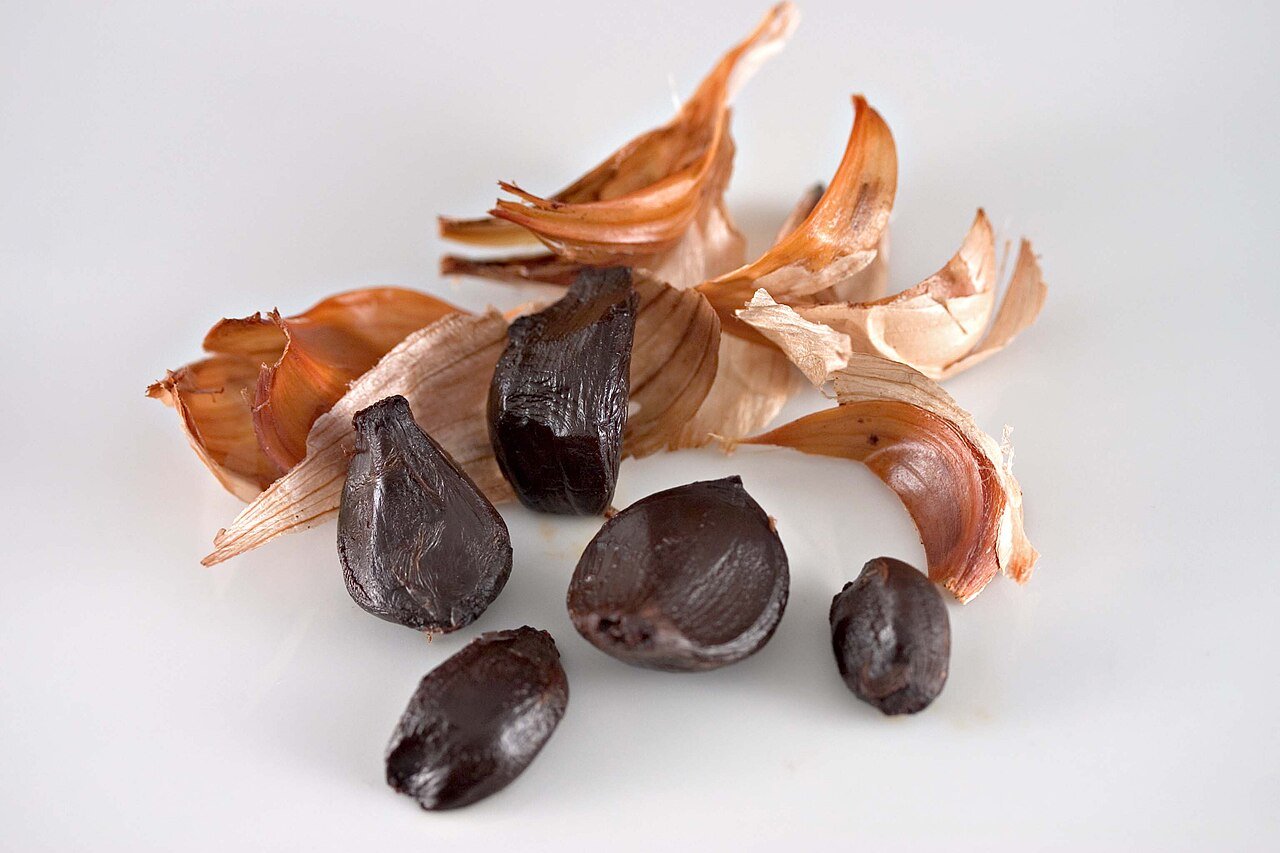

Black garlic looks burnt but tastes nothing like it. The cloves are soft and sticky, with a sweet, tangy flavor often compared to balsamic vinegar, dried figs or tamarind, and almost none of the sharp bite of raw garlic. It is made from ordinary heads of garlic, held warm and humid for weeks, and it can be made at home with a rice cooker and some patience.
This guide explains what changes in the garlic, compares raw garlic and its relatives using official data (black garlic itself is not in those tables), and walks through making, storing and cooking with it.
What changes when garlic turns black
Whole, unpeeled heads are kept warm and humid for several weeks, then usually dried. Producers use their own conditions, but three changes happen in every method:
- The color darkens. Sugars and amino acids in the garlic react under heat and form brown compounds, the Maillard reaction. At high heat it takes minutes, as on toast; black garlic runs it very slowly at low heat
- The sharpness disappears. Raw garlic's bite forms when cut cells release compounds that an enzyme turns pungent. That enzyme does not survive long heating, so aged cloves stay mild even when sliced
- Water leaves and the texture changes. Firm cloves turn soft and then, after drying, chewy like a dried fruit. The head becomes noticeably lighter
So black garlic is not garlic with something added. It is garlic in which its own ingredients have slowly reacted with each other.
Raw garlic and processed forms compared
Neither USDA nor Japan's official food composition tables include black garlic. The following tables show related foods, not black garlic, so you can see how processing and drying change garlic in general.
| Food | Energy (kcal) | Water (g) | Protein (g) | Fat (g) | Carbohydrate (g) | Fiber (g) | Potassium (mg) | Vitamin C (mg) |
|---|---|---|---|---|---|---|---|---|
| Garlic, raw | 129 | 63.9 | 6.4 | 0.9 | 27.5 | 6.2 | 510 | 12 |
| Garlic, sautéed in oil | 191 | 53.7 | 8.2 | 5.9 | 30.6 | 6.8 | 610 | 10 |
| Garlic powder, no salt added | 380 | 3.5 | 19.9 | 0.8 | 73.8 | — | 390 | (0) |
| Garlic scapes, raw | 44 | 86.7 | 1.9 | 0.3 | 10.6 | 3.8 | 160 | 45 |
Source: MEXT, Standard Tables of Food Composition in Japan (8th rev., 2023 suppl.) · values in brackets are estimates in the source · — = not measured
- Sautéing in oil raises calories through the added oil and some water loss
- Garlic powder is garlic with nearly all its water removed, so its calories, protein and carbohydrate per 100 g are roughly three times those of raw garlic, while its vitamin C is gone
- Garlic scapes, the flower stalks sold at farmers markets in early summer, are much lighter than the cloves and carry more vitamin C
Black garlic also loses water while it ages, so its figures per 100 g would not match raw garlic. Without official data, this article does not estimate them.
Garlic among its relatives
| Food | Energy (kcal) | Water (g) | Carbohydrate (g) | Fiber (g) | Sugars (g) | Potassium (mg) | Vitamin C (mg) |
|---|---|---|---|---|---|---|---|
| Garlic | 149 | 58.6 | 33.1 | 2.1 | 1 | 401 | 31.2 |
| Shallots | 72 | 79.8 | 16.8 | 3.2 | 7.9 | 334 | 8 |
| Leeks, bulb and lower leaves | 61 | 83 | 14.2 | 1.8 | 3.9 | 180 | 12 |
| Onions | 40 | 89.1 | 9.3 | 1.7 | 4.2 | 146 | 7.4 |
Source: USDA FoodData Central
Garlic is the densest allium here: less water and more carbohydrate than shallots, leeks or onions. Interestingly, raw garlic lists little sugar in the USDA data, much less than onions or shallots, even though black garlic tastes sweet. Raw garlic's carbohydrate is mostly not simple sugar.
Making black garlic in a rice cooker
Producers use dedicated aging chambers. At home, the keep-warm function of an electric rice cooker is the usual substitute.
What you need
- Whole heads of garlic, unbroken, with no soft spots, mold or damaged skin. Loose cloves dry out or spoil where they were separated
- A rice cooker with a keep-warm setting. It will run for weeks, and the smell lingers in the inner pot and rubber gasket. An old or spare cooker is ideal
- A well-ventilated spot. The first several days fill the room with a strong garlic smell; a garage, utility room or porch works well
Steps
- Brush off dirt and loose outer skin. If you rinse the heads, let them dry completely; wet garlic invites mold
- Line the inner pot with a layer or two of paper towels or a clean cloth, and stand the heads root side down. Direct contact with the pot can scorch the bottom
- Cover the top with more paper towels, close the lid and turn on keep-warm only. Do not press the cook button
- Rotate every few days. Move the bottom heads to the top, since the bottom runs hotter. Replace the paper towels if water has pooled
- Check after about two to three weeks. Cut one clove open. It is ready when it is evenly dark brown to black all the way through and soft when pressed. If the center is still pale, give it a few more days
- Dry. Spread the heads on a rack in an airy place for several days to about a week, until the sticky surface dries and the cloves turn chewy
Signs that a batch has failed
- White, green or blue fuzz inside or outside means mold. Discard the whole head, not just the visible clove
- A sour smell means it held too much moisture and spoiled, usually from wet garlic or pooled water left too long
- Hard, bitter cloves mean the temperature was too high or the bottom scorched. Use thicker padding next time
Keep-warm temperatures vary between models, so the same number of days gives different results. Start with a small batch to learn your cooker's timing.
Choosing and storing
- Store-bought black garlic comes as whole heads, peeled cloves, or paste. Whole heads keep best; peeled cloves are easier to use
- Look for even color and soft, slightly sticky cloves. Dry, hard or very bitter cloves have been overdone
- Refrigerate in an airtight container after opening, or freeze for longer storage; frozen cloves slice easily
- Homemade: dry thoroughly before storing, label with the date, and check for mold before each use
How to use black garlic
- On its own, a clove at a time, like a piece of dried fruit
- Mashed into butter or mayonnaise for spreading on bread, burgers or steak
- Blended into a sauce or vinaigrette with soy sauce, vinegar or olive oil
- Sliced over pizza, pasta or rice bowls at the end of cooking
- Stirred into stews or ramen broth for a deep, sweet savory note
Its sweetness pairs well with salty and tangy partners such as soy sauce, aged cheese, anchovies, vinegar and citrus, and it can stand in for a little sugar or honey in a savory glaze. Start with one or two cloves per dish and add more after tasting, since the flavor builds as sauces reduce.
Black garlic does not replace raw garlic in a recipe. It is mellow and sweet rather than sharp, so use it as a separate seasoning and keep raw garlic where you want its bite.
How different countries use black garlic
- United States — Black garlic is sold in specialty stores and online and used in restaurant kitchens, mainly as a gourmet ingredient for sauces, butters and pizza
- Korea — Black garlic (heungmaneul) is widely sold, often eaten plain by the clove or made into extracts and syrups, and making it at home in a rice cooker is common
- Japan — Black garlic (kuro-ninniku) is sold in supermarkets and eaten as a snack, and Aomori Prefecture, known for growing garlic, sells it as a local product
- Spanish-speaking countries — In Spain, ajo negro has become a chef's ingredient in sauces and modern tapas; elsewhere in Latin America it is mostly found in specialty shops
Wherever it is used, black garlic works best as what it is: a sweet, mellow seasoning with its own character, not a stronger version of the garlic you started with.
FAQ
Why is there no nutrition table for black garlic?
Neither USDA FoodData Central nor Japan's official food composition tables list black garlic, and products vary with how long and how warm they were aged and how much they were dried. Rather than estimate, this article shows raw garlic and related foods and labels them as such. For a store-bought product, read its own Nutrition Facts panel.
Is black garlic fermented?
It is often called fermented garlic, but the main change is not caused by microbes. Gentle heat over weeks drives a browning reaction between sugars and amino acids, the same family of reactions that browns bread crust and seared meat.
How long does homemade black garlic keep?
Fully dried black garlic keeps for weeks in an airtight container in the fridge, and longer in the freezer. Peeled cloves dry out faster than whole heads. Discard any garlic that shows fuzzy mold or smells sour.
Can I use any rice cooker?
Any rice cooker with a separate keep-warm setting can work, but keep-warm temperatures differ between models, so timing varies. The smell also soaks into the inner pot and gasket, which is why many people use an old cooker just for this.