How to Cook Quinoa: Rinsing, Water Ratio and Nutrition vs. Rice
How to rinse and cook quinoa on the stove or in a rice cooker, with USDA figures comparing it to white rice, brown rice, oats and bulgur.
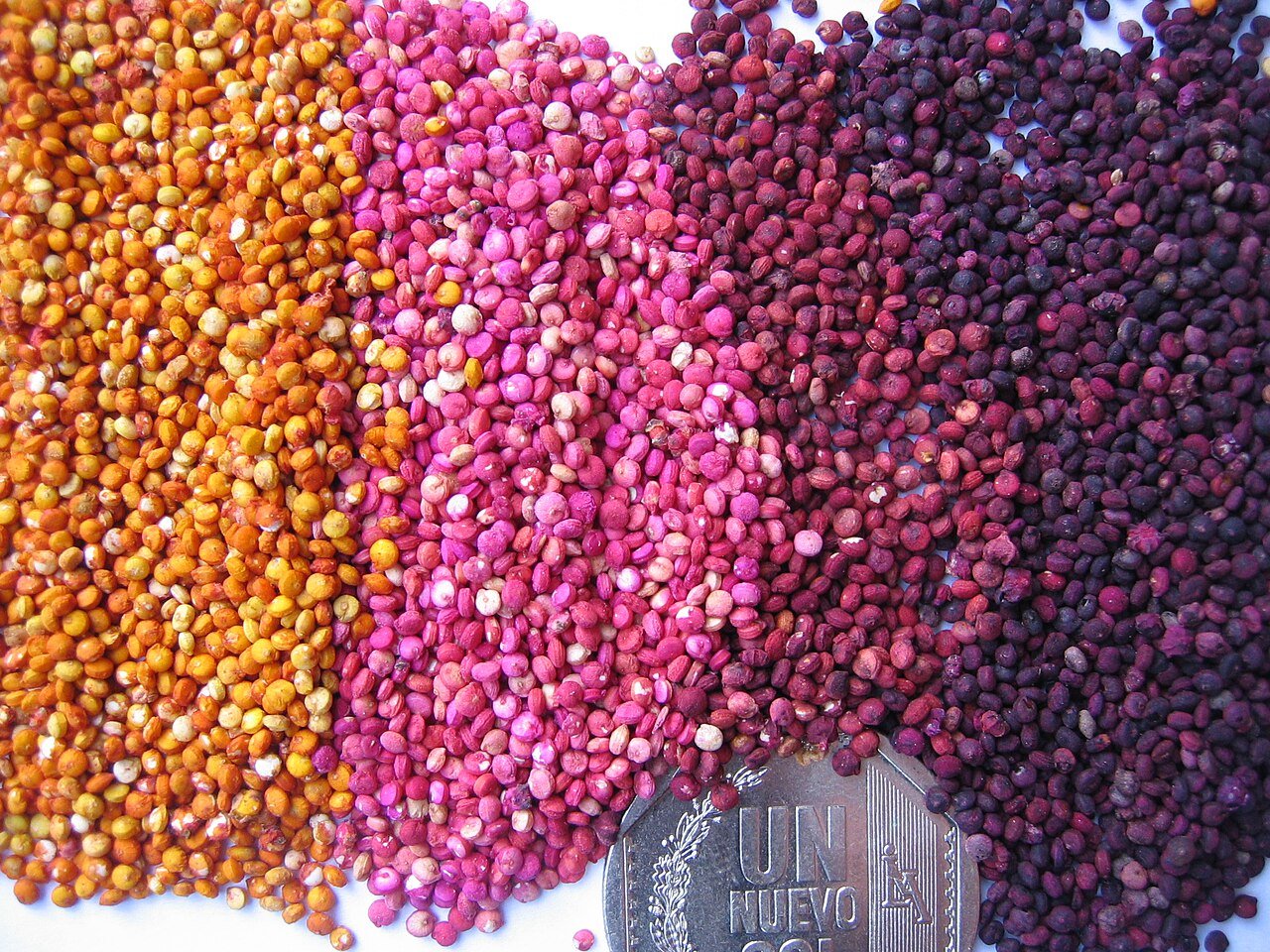

The first bag of quinoa usually raises two questions. Do you need to rinse it, and can you cook it like rice? The front of the package tends to say "superfood" in large letters, while the cooking directions on the back differ from brand to brand.
This guide sticks to what you need to get quinoa onto the table. Instead of describing how it compares with other grains, it puts the official numbers from USDA FoodData Central side by side, both for the dry grain and for a cooked portion.
Quinoa is a seed, so it cooks differently
Quinoa is not a cereal grass like rice or wheat. It is the seed of a plant in the amaranth family, grown for thousands of years in the high Andes of South America. Cooks handle it like a grain, and the USDA tables list it with cereal grains, but a few structural differences change how you prepare it:
- The outer coating holds saponins. These compounds taste bitter and foam like soap. The plant makes them to keep birds away
- The germ wraps around the seed. When quinoa is done, a thin white ring pops loose from each seed. That curl is the germ, and seeing it is your cue that the pot is ready
- It cooks faster than rice. The seeds are small, so about 15 minutes of simmering is usually enough
Dry grains compared, 100 g each
All rows in the table below come from the same source, USDA FoodData Central, and show 100 g of uncooked grain (a little over half a cup). Keeping one source per table matters: different national tables measure fiber with different methods, so the same rice can show quite different fiber numbers depending on where you look.
| Food | Energy (kcal) | Protein (g) | Fat (g) | Carbohydrate (g) | Fiber (g) | Potassium (mg) | Magnesium (mg) | Iron (mg) |
|---|---|---|---|---|---|---|---|---|
| Quinoa | 368 | 14.1 | 6.1 | 64.2 | 7 | 563 | 197 | 4.6 |
| White rice, long-grain, enriched | 365 | 7.1 | 0.66 | 80.0 | 1.3 | 115 | 25 | 4.3 |
| White rice, long-grain, unenriched | 365 | 7.1 | 0.66 | 80.0 | 1.3 | 115 | 25 | 0.8 |
| Brown rice, long-grain | 367 | 7.5 | 3.2 | 76.2 | 3.6 | 250 | 116 | 1.3 |
| Oats, regular or quick | 379 | 13.2 | 6.5 | 67.7 | 10.1 | 362 | 138 | 4.2 |
| Millet | 378 | 11.0 | 4.2 | 72.8 | 8.5 | 195 | 114 | 3.0 |
| Amaranth | 371 | 13.6 | 7.0 | 65.2 | 6.7 | 508 | 248 | 7.6 |
Source: USDA FoodData Central
A few things stand out:
- Calories are close across the board. In dry form, every grain here lands in a similar range. Swapping rice for quinoa does not cut calories by itself
- Quinoa has about twice the protein of white rice. Oats and amaranth sit at a similar level to quinoa
- Potassium and magnesium show the biggest gaps. Polishing white rice removes the bran layer, so those minerals drop. Quinoa is also higher than brown rice in both
- Watch the iron row for enriched rice. Most white rice sold in the US is enriched, meaning iron and some B vitamins are added back after milling. That is why enriched white rice shows iron close to quinoa, while the unenriched version is far lower. Check the word "enriched" on the bag if this matters to you
The same comparison on your plate
Nobody eats 100 g of dry grain at a sitting. The next table switches to 150 g of cooked grain, a typical side portion on a dinner plate.
| Food | Energy (kcal) | Protein (g) | Carbohydrate (g) | Fiber (g) |
|---|---|---|---|---|
| Quinoa | 180 | 6.6 | 32.0 | 4.2 |
| White rice, long-grain | 195 | 4.0 | 42.3 | 0.6 |
| Brown rice, long-grain | 184 | 4.1 | 38.4 | 2.4 |
| Couscous | 168 | 5.7 | 34.8 | 2.1 |
| Bulgur | 124 | 4.6 | 27.9 | 6.8 |
| Millet | 178 | 5.3 | 35.5 | 2.0 |
Source: USDA FoodData Central
Cooked grains absorb water, so calories per gram fall far below the dry figures. Portion for portion, cooked quinoa comes in a little lower in calories than white rice, with more protein and fiber. Bulgur, the cracked wheat used in tabbouleh, beats quinoa on fiber in this comparison, which is worth knowing if you are choosing a base for a grain salad.
How to rinse quinoa
- Put the quinoa in a fine-mesh strainer. A regular colander lets the seeds slip through
- Set the strainer in a bowl of cool water, rub the seeds between your hands for a few seconds, then lift the strainer out and dump the water
- Repeat two or three times, until the water is clear and barely foams
If the bag says "pre-rinsed," one quick rinse under the tap is enough. Skipping the rinse on unwashed quinoa leaves a faint bitterness, and that bitterness is the most common reason first-timers decide they do not like quinoa.
How to cook quinoa
On the stove
- Combine rinsed quinoa and water at 1 to 2 by volume, for example 1 cup quinoa and 2 cups water, in a saucepan. Add a pinch of salt if you like
- Bring to a boil over high heat, then lower to a gentle simmer, cover and cook about 15 minutes
- When the water is absorbed and the white rings are visible, take the pan off the heat and leave it covered for 5 minutes
- Fluff with a fork. Pressing with a spoon mashes the seeds
For salads where you want separate, chewy seeds, use slightly less water. For a softer, porridge-like texture, use more. Cooking in broth instead of water is a common American shortcut for more flavor, but it adds sodium, so check the carton.
In a rice cooker, alone or mixed with rice
- On its own, use the same 1-to-2 ratio and the white rice setting
- To mix with rice, start with quinoa as one-tenth to one-fifth of the total volume. Rinse it separately, add it to the rice and keep your usual water level
- Only when quinoa makes up a third or more of the pot should you cut the water slightly. Quinoa takes up less water than rice
In an Instant Pot or other pressure cooker
Many cooks use a slightly lower water ratio here because little steam escapes. Follow the manual for your model and let the pressure release naturally before opening.
Buying and storing
When shopping, look at three things on the package:
- Rinsing — "pre-rinsed" or "pre-washed" saves you most of the work. Without it, rinse as above
- Seed condition — even size, few broken seeds and little powder at the bottom of the bag mean more even cooking
- Package size — quinoa contains some fat, so an open bag can go stale over time. Start with a small bag until you know you like it
Bulk bins are common in American natural food stores. They are fine if the store turns over stock quickly; smell the quinoa, and skip it if it smells like old oil.
| Form | Where to keep it | How long |
|---|---|---|
| Dry, unopened | Cool, dark cupboard | Follow the date on the package |
| Dry, opened | Airtight container; refrigerate in hot weather | Discard if it smells rancid |
| Cooked | Cool quickly, then refrigerate | Eat within 3 to 4 days (USDA FSIS) |
| Cooked, longer storage | Freeze flat in portion bags | Reheat in the microwave until steaming hot |
USDA's Food Safety and Inspection Service advises refrigerating cooked food within 2 hours, or within 1 hour when the air is above 90°F, which applies to a big pot of meal-prep quinoa as much as to rice.
Beyond a bowl of plain quinoa
Cook a large batch once and use it through the week:
- Grain salad base. Cool cooked quinoa completely, then mix with cucumber, tomato and red onion, and dress with olive oil, lemon juice and salt. Unlike rice, it stays tender when cold, which makes it good for packed lunches. Add the dressing just before eating to keep the seeds from going soggy
- A spoonful in soup. Stir cooked quinoa into chili, minestrone or chicken soup for texture. Dry quinoa added straight to the pot releases starch and thickens the broth, so add it about 10 minutes before the end
- Breakfast porridge. Simmer with milk, top with fruit and nuts, the way you would cook oatmeal
- Patties and fillings. Squeeze cooked quinoa well before mixing it into veggie burger or stuffed pepper fillings so they hold together
Quinoa flakes, quinoa flour and puffed quinoa are also sold. Their ingredients vary by brand, so the figures in this article do not apply to them. Read the Nutrition Facts label on each product.
How different countries eat quinoa
- Peru and Bolivia — In the Andes, where quinoa comes from, it is everyday food cooked into soups such as sopa de quinua and porridges, and quinoa flour is made into drinks
- United States — Quinoa took the starch spot in the "grain bowl," topped with roasted vegetables, a protein and a sauce. It also appears in salad bars and frozen meals
- Japan — Quinoa is more often a topping than a staple. Home cooks boil a batch, keep it in the fridge and scatter a spoonful over salads and soups
- Korea — It is most often cooked mixed into white rice, one grain among many in a "multigrain rice" blend, and is sold in mixed-grain bags with brown rice and oats
None of these is the right way. If you are new to quinoa, the Korean approach of mixing a little into rice is an easy start; once the texture feels familiar, cook it alone and branch out into salads and bowls.
FAQ
Do I really have to rinse quinoa?
Quinoa seeds carry a coating of saponins that tastes bitter and soapy. Many brands sold in US supermarkets are labeled "pre-rinsed" or "pre-washed," and those need only a quick rinse. If the bag says nothing, rinse in a fine-mesh strainer until the water no longer foams.
What is the difference between white, red and black quinoa?
The biggest difference is texture. White quinoa is the softest and cooks fastest; red and black hold their shape and stay slightly chewy, which suits salads. The official tables used here do not list the colors separately, so this article does not compare their nutrients.
Can I cook quinoa in a rice cooker?
Yes. Use the same 1-to-2 ratio by volume as on the stove (for example, 1 cup quinoa to 2 cups water) and the white rice setting. If you are mixing a little quinoa into rice, you can usually keep the rice's normal water line.
How long does cooked quinoa keep?
Handle it like any cooked leftover. USDA's Food Safety and Inspection Service says to refrigerate leftovers within 2 hours and eat them within 3 to 4 days. For longer storage, freeze it flat in portion-size bags.