100-Calorie Snacks Compared: How Much You Get of Each
USDA figures showing how many grams of fruit, vegetables, yogurt, eggs, cheese, popcorn, nuts, jerky and chips make 100 kcal, and how to choose a snack.
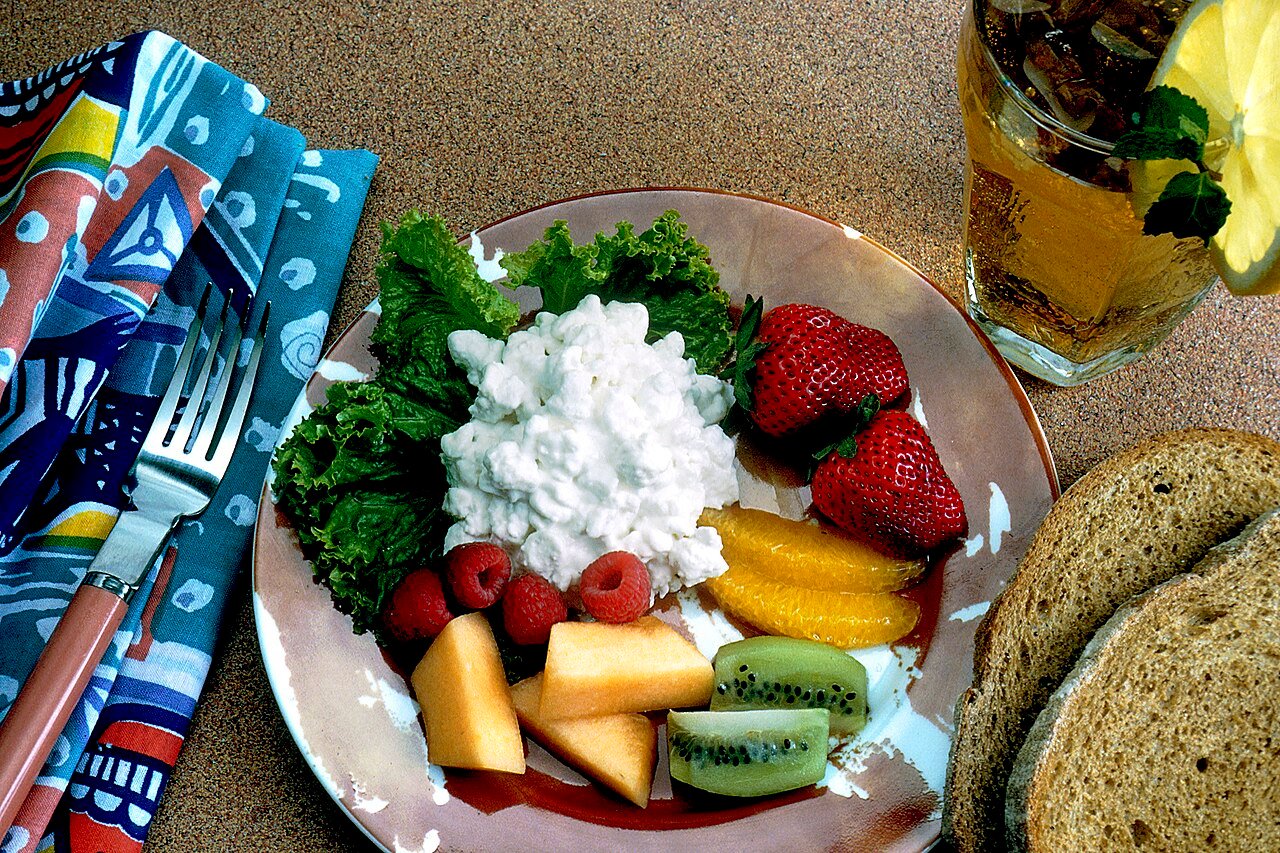

Two snacks with the same calories can look completely different in the hand. One is a mixing bowl of celery sticks; another is a small handful of almonds. Neither is right or wrong; they do different jobs. The difference comes mostly from water and fat: water adds weight and volume without calories, and fat packs the most calories into the least space.
This guide uses USDA FoodData Central to show what each snack carries, and then how much of each makes 100 kcal, so you can choose based on what you actually want from a snack.
Water-rich snacks: the volume group
| Food | Energy (kcal) | Water (g) | Protein (g) | Fat (g) | Carbohydrate (g) | Fiber (g) |
|---|---|---|---|---|---|---|
| Celery | 14 | 95.4 | 0.69 | 0.17 | 3.0 | 1.6 |
| Baby carrots | 35 | 90.3 | 0.64 | 0.13 | 8.2 | 2.9 |
| Strawberries | 31 | 91.1 | 0.64 | 0.22 | 7.6 | 1.8 |
| Blueberries | 57 | 84.2 | 0.74 | 0.33 | 14.5 | 2.4 |
| Apple, with skin | 52 | 85.6 | 0.26 | 0.17 | 13.8 | 2.4 |
| Grapes | 69 | 80.5 | 0.72 | 0.16 | 18.1 | 0.9 |
| Banana | 89 | 74.9 | 1.1 | 0.33 | 22.8 | 2.6 |
| Greek yogurt, plain, nonfat | 59 | 85.1 | 10.2 | 0.39 | 3.6 | 0 |
| Milk, 2% | 50 | 89.2 | 3.3 | 2.0 | 4.8 | 0 |
| Edamame, cooked from frozen | 121 | 72.8 | 11.9 | 5.2 | 8.9 | 5.2 |
| Egg, hard-boiled | 155 | 74.6 | 12.6 | 10.6 | 1.1 | 0 |
Source: USDA FoodData Central
- Celery, baby carrots and strawberries are mostly water. They fill a bowl for very few calories
- Among fruits, grapes and bananas are the most calorie-dense, and grapes the sweetest, while berries are lighter
- Greek yogurt, edamame and eggs bring protein, something fruit and raw vegetables barely provide
- Edamame combines protein and fiber, an unusual pairing in this group
Dry or rich snacks: the small-portion group
| Food | Energy (kcal) | Water (g) | Protein (g) | Fat (g) | Carbohydrate (g) | Fiber (g) | Sodium (mg) |
|---|---|---|---|---|---|---|---|
| Mozzarella, part-skim (string cheese) | 254 | 53.8 | 24.3 | 15.9 | 2.8 | 0 | 619 |
| Beef jerky | 410 | 23.4 | 33.2 | 25.6 | 11 | 1.8 | 1,785 |
| Popcorn, air-popped | 387 | 3.3 | 12.9 | 4.5 | 77.8 | 14.5 | 8 |
| Pretzels, hard, salted | 384 | 3.1 | 10.0 | 2.9 | 80.4 | 3.4 | 1,240 |
| Almonds | 579 | 4.4 | 21.1 | 49.9 | 21.6 | 12.5 | 1 |
| Dark chocolate, 70–85% cacao | 598 | 1.4 | 7.8 | 42.6 | 45.9 | 10.9 | 20 |
| Potato chips, salted | 532 | 1.9 | 6.4 | 34.0 | 53.8 | 3.1 | 527 |
Source: USDA FoodData Central
- Almonds, chocolate and chips are the most calorie-dense rows, mainly because of fat
- Air-popped popcorn and pretzels are low in fat and high in carbohydrate; popcorn has far more fiber, and pretzels far more sodium
- Beef jerky is the highest in protein of any snack here, and also the saltiest row
- String cheese sits between: fairly high in protein and sodium, moderate in calories
How much makes 100 kcal
Here the table switches from a fixed weight to a fixed amount of energy. The first column shows how many grams of each food add up to 100 kcal, and the other columns show what comes with it.
| Food | Weight for 100 kcal (g) | Protein (g) | Fiber (g) | Sugars (g) | Sodium (mg) |
|---|---|---|---|---|---|
| Celery | 714 | 4.9 | 11.4 | 9.6 | 571 |
| Baby carrots | 286 | 1.8 | 8.3 | 13.6 | 223 |
| Strawberries | 323 | 2.1 | 5.8 | 17.2 | 32.3 |
| Apple, with skin | 192 | 0.5 | 4.6 | 20.0 | 1.9 |
| Apple juice, unsweetened | 217 | 0.22 | 0.43 | 20.9 | 8.7 |
| Grapes | 145 | 1.0 | 1.3 | 22.4 | 2.9 |
| Banana | 112 | 1.2 | 2.9 | 13.7 | 1.1 |
| Greek yogurt, plain, nonfat | 169 | 17.3 | 0 | 5.5 | 61.0 |
| Milk, 2% | 200 | 6.6 | 0 | 10.1 | 94.0 |
| Edamame | 83 | 9.8 | 4.3 | 1.8 | 5.0 |
| Egg, hard-boiled | 65 | 8.1 | 0 | 0.72 | 80.0 |
| String cheese | 39 | 9.6 | 0 | 0.44 | 244 |
| Beef jerky | 24 | 8.1 | 0.44 | 2.2 | 435 |
| Popcorn, air-popped | 26 | 3.3 | 3.7 | 0.22 | 2.1 |
| Pretzels | 26 | 2.6 | 0.89 | 0.58 | 323 |
| Almonds | 17 | 3.7 | 2.2 | 0.75 | 0.17 |
| Dark chocolate | 17 | 1.3 | 1.8 | 4.0 | 3.3 |
| Potato chips | 19 | 1.2 | 0.58 | 0.06 | 99.1 |
Source: USDA FoodData Central
What changes when you look at it this way:
- Portion sizes spread enormously. Celery and strawberries take several hundred grams to reach 100 kcal, while almonds, chocolate and chips reach it in a very small handful
- Protein per 100 kcal favors Greek yogurt by a wide margin, followed by edamame, string cheese, eggs and jerky
- Fiber per 100 kcal favors vegetables and berries, with apple, edamame and popcorn also high
- Sugar per 100 kcal is highest in grapes, apple and apple juice. Whole apple and juice carry similar sugar per 100 kcal, but the apple brings fiber and takes far longer to eat
- Sodium per 100 kcal is highest in celery (see the FAQ), jerky and pretzels
Choosing for the moment
When dinner is still hours away
Pick something with protein, ideally with fiber too: Greek yogurt with berries, a hard-boiled egg with baby carrots, or a bowl of edamame. Many people find snacks with protein more substantial than fruit or juice alone.
When you are just bored or want to munch
Go for volume and crunch: celery, carrots, cucumber slices, strawberries or air-popped popcorn. You get a lot to eat for the calories.
Before exercise or on a busy afternoon
Something quick and easy to digest, such as a banana or a small handful of pretzels, gives carbohydrate without much fat or fiber to sit heavily.
When you want something salty
Air-popped popcorn salted at home lets you control the amount. Jerky, pretzels and chips are saltier per 100 kcal; pair a small portion with something fresh, like a few cherry tomatoes or an apple.
When you want chocolate
A square or two of dark chocolate after a meal, rather than from the bar while working, keeps the portion in view. It is calorie-dense, so the amount matters more than the type.
Dips and toppings change the picture
The tables show plain foods. What goes on them often adds as much as the snack itself:
- Dips. Ranch, hummus, guacamole and peanut butter are all calorie-dense, so a spoonful of dip can match or exceed a whole bowl of carrots or celery. Measure the dip into a small dish rather than dipping from the tub
- Yogurt toppings. Granola, honey and sweetened fruit compotes turn plain Greek yogurt into a different snack. Fresh berries and a few nuts keep it closer to the table
- Popcorn toppings. Melted butter, cheese powder or caramel change air-popped popcorn completely; a little salt and spices such as paprika or chili powder change it very little
- Flavored versions. Sweetened yogurts, honey-roasted nuts, flavored jerky and seasoned chips all differ from the plain rows, usually with more sugar or sodium
Reading the label on packaged snacks
- Start with the serving size at the top of the Nutrition Facts panel. Many bags hold more than one serving, and the numbers below apply to one
- Check calories per serving, then compare with the 100 kcal table to see how a serving compares in size with the plain foods
- Look at protein and fiber if you want the snack to carry you to the next meal
- Look at sodium and added sugars, which the US label lists separately from total sugars
- Glance at the ingredient list. Foods are listed by weight, so the first few ingredients make up most of the product
Keeping snacks fresh and safe
- Cut fruit and vegetables keep best in a covered container with a damp paper towel; carrots and celery stay crisp in a little water in the fridge
- Yogurt, cheese, milk and boiled eggs are perishable. USDA's Food Safety and Inspection Service advises not leaving perishable food out for more than 2 hours, or 1 hour above 90°F, which matters for snacks packed in a bag for the day. Use an insulated bag with an ice pack
- Nuts and seeds contain oil and can go rancid; keep opened bags airtight and somewhere cool
- Popcorn and chips go stale once opened; clip the bag tightly or move them to a container
Portioning snacks ahead, step by step
- Buy in bulk if it saves money, but do not snack from the big bag
- Weigh one portion once on a kitchen scale, using the 100 kcal table or the package label, so you learn what it looks like
- Portion the rest into small containers or bags right after shopping
- Keep the volume group visible at eye level in the fridge, washed and cut; keep the dense group out of sight in a cupboard
- Pair a dense snack with a light one, for example a few almonds with an apple, so the plate looks fuller
- Drink water first if you are not sure whether you are hungry or thirsty
How different countries snack
- United States — Chips, pretzels, popcorn, granola bars and string cheese fill the snack aisle, and "100-calorie packs" are sold for many brands. Baby carrots with dip are a common lunchbox item
- Korea — Fruit cut and shared after a meal, roasted sweet potatoes in winter, boiled corn and dried squid with a drink are classic snacks
- Japan — Convenience stores sell single boiled eggs, small cheese portions, edamame, and rice balls, which are often eaten as a light snack between meals
- Spanish-speaking countries — In Mexico, fresh fruit, cucumber and jícama sticks with lime and chili are sold from street carts. In Spain, a small plate of olives, almonds or cheese with a drink is a familiar tapa
Every culture has its light, watery snacks and its small, rich ones. Knowing which group a snack belongs to, and why you want it right now, makes choosing simpler than counting.
FAQ
Are 100-calorie snack packs the same as these portions?
Not necessarily. Packaged 100-calorie packs are portioned by the maker, and their ingredients differ from the plain foods in these tables. Read the Nutrition Facts label on the pack for its own figures.
Why does celery show so much sodium per 100 kcal?
Celery has a modest amount of natural sodium, but it is so low in calories that it takes a very large amount to reach 100 kcal. Nobody eats that much at once, so the sodium in a normal handful of sticks stays small.
Is popcorn a whole grain?
Yes, popcorn is whole-grain corn. The air-popped row shows plain popcorn; movie-theater and microwave popcorn add oil, butter flavoring and salt, which change the numbers a lot.
Is dried fruit a good swap for fresh?
Drying removes water, so dried fruit is far more concentrated by weight. A small handful can hold as many calories as a much larger bowl of the fresh fruit. Measure a portion into a bowl rather than eating from the bag.